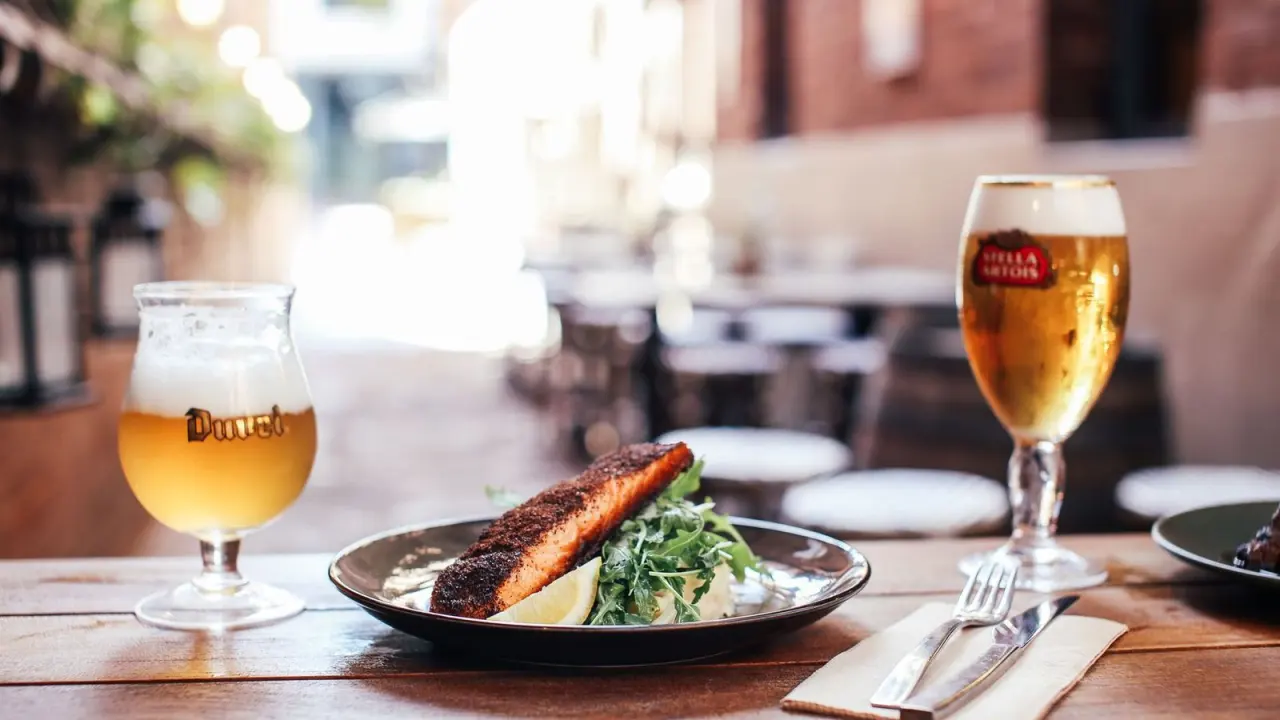
Planning dinner and wondering which beer to pour? The simplest beer and food pairing rule is to match the intensity of the beer to the dish, then look for flavors that echo or contrast.
This guide is one part of the wider look at craft beer in miami beach, focused on what to pour with what you eat.
| Item | Value |
|---|---|
| Beer styles to choose from | About 80 to 120 styles |
| Alcohol in a dark Guinness-style stout | About four percent |
| Carbonation pushed out when beer is poured properly into a glass | 60 percent |
| Suggested bottle size to share between courses | 750 millilitres |
| Simple principles for a balanced match | Three Cs: contrast, complement, cut |
These figures come from a Georgia Straight interview with certified cicerones. Figures can change, so check the source before you rely on them.
Start with intensity, not color
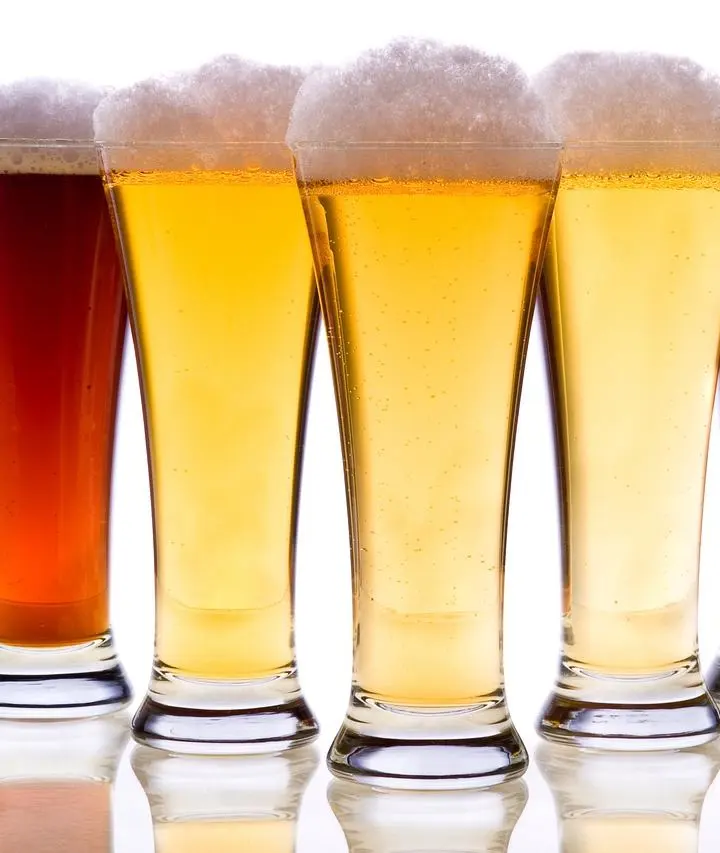
With about 80 to 120 beer styles, according to a cicerone quoted by the Georgia Straight, no single beer fits every dish. The most useful starting point is to match strength with strength: delicate dishes work best with delicate beers, and strongly flavored foods demand assertive beers.
The Cicerone and Brewers Association guide to beer and food says intensity can come from alcoholic strength, malt character, hop bitterness, sweetness, richness and roastiness. So “strong” is not only about alcohol.
Color is a poor shortcut. The same Georgia Straight interview points out that dark Guinness, at about four percent alcohol, is a fairly light beer that can sit alongside lighter foods, while a heavier imperial stout may overpower delicate oysters (source).
Here are three easy intensity matches from the Cicerone guide:
- Grilled fish with a Pilsener.
- Roasted chicken with a malty lager or a pale ale.
- Grilled or roast beef with a hearty porter or stout.
The reverse also holds. The same interview notes that a crisp lager can offset fatty, spicy pub food nicely but does not suit a Sunday roast, which can stand up to a much bigger beer such as a porter or stout (source).
Contrast, complement and cut
Once the intensity is close, you can think in the Three Cs. A cicerone quoted by the Georgia Straight describes it as looking to contrast, complement or cut the food or the beer.
- Complement: share a flavor. The Cicerone guide cites an English-style brown ale with handmade cheddar, an imperial stout with chocolate truffles, and an Oktoberfest lager with roasted pork (source).
- Contrast: set opposites side by side. One brewmaster likes a robust stout with a hearty steak, because the beer’s bitterness and slight sweetness play off the steak’s earthiness (Tasting Table).
- Cut: let the beer reset your mouth. Carbonation scrubs the tongue and lifts food and fat, which prepares you for the next bite (craftbeer.com).
The Cicerone guide adds that every good match should involve both contrast and complement, though some lean more on one than the other. The aim is some kind of balance.
Think about the whole plate, too. Cicerone program founder Ray Daniels says to consider the rest of the dish, namely preparation, sauces, garnishes and sides, so “beer X with pork loin” is never the full story (Brew Your Own).
A related trick is to look to classic cuisines. Because saison is a Belgian farmhouse beer, Daniels suggests the rustic cooking of Belgium is a good call for it (source).
What bitterness, spice and carbonation do
Some beer traits behave in predictable ways with food. Knowing them helps you avoid the bad matches that give beer an unfair reputation at the dinner table.
- Bitterness: Daniels calls it the live wire of pairing. It can cut richness, but a high-bitterness beer with an oily fish like lox can turn harsh, with metallic or mineral notes (Brew Your Own).
- Chili heat: bitterness tends to accentuate chili-type heat, and the same is true to an extent of high-ABV beers (source).
- Carbonation: it cleanses the palate, which makes beer well suited to spicy and greasy foods (Georgia Straight).
- Hoppy IPA: a brewmaster calls it the bully in the fight, so it needs foods with big flavors, such as blue cheese (Tasting Table).
A bad match is not a failure. One cicerone says there is no better way to understand pairing than getting a bad match, because when something does not work it is obvious: it is bitter and it fights.
Beer pairings by course
You do not need a five-course dinner to use these ideas. The pairings below come from the Cicerone guide unless noted, and they are starting points rather than promises.
Starters and salads
Crisp, refreshing beers are the best way to start a meal, and the goal is to avoid wearing out your palate. Look for beers that are light in body and not aggressively bitter.
- Salads: a lighter wheat beer, or a hoppy Pilsener when the greens are bitter.
- Seared Ahi tuna: a floral blonde ale.
- New Orleans style shrimp: a spicy saison.
- Smoked fish: a full-flavored red ale or amber lager.
Main courses
For mains, keep matching intensity. The sweet heat of barbecue can be tamed by a Maibock or an abbey-style dubbel (Cicerone).
For burgers, a cicerone recommends pale ale, whose malt backbone suits grilled, smoky, umami meat, especially with cheddar on top (Georgia Straight). Stout with oysters is another classic, as long as the stout is a lighter one.
Dessert and cheese
Dessert is hard with wine but works well with beer, since rich, full-flavored beers balance sweetness. Chocolate loves a dark beer.
- Flourless chocolate cake or truffles: an inky imperial stout.
- Fruity desserts: a strong pale tripel.
- Blue cheese: an IPA, whose herbal, floral hop nose blends with the cheese while the bitterness cleanses the palate.
- Aged cheddar: a stout.
- Soft-ripened cheese such as Brie: a fruit beer.
Seasons matter as well. The Cicerone guide says the beers and foods of a season pair naturally, such as lighter choices in warm summer months and heavier beer in winter, and one cicerone’s summer favorite is BBQ ribs with Schwarzbier (Tasting Table).
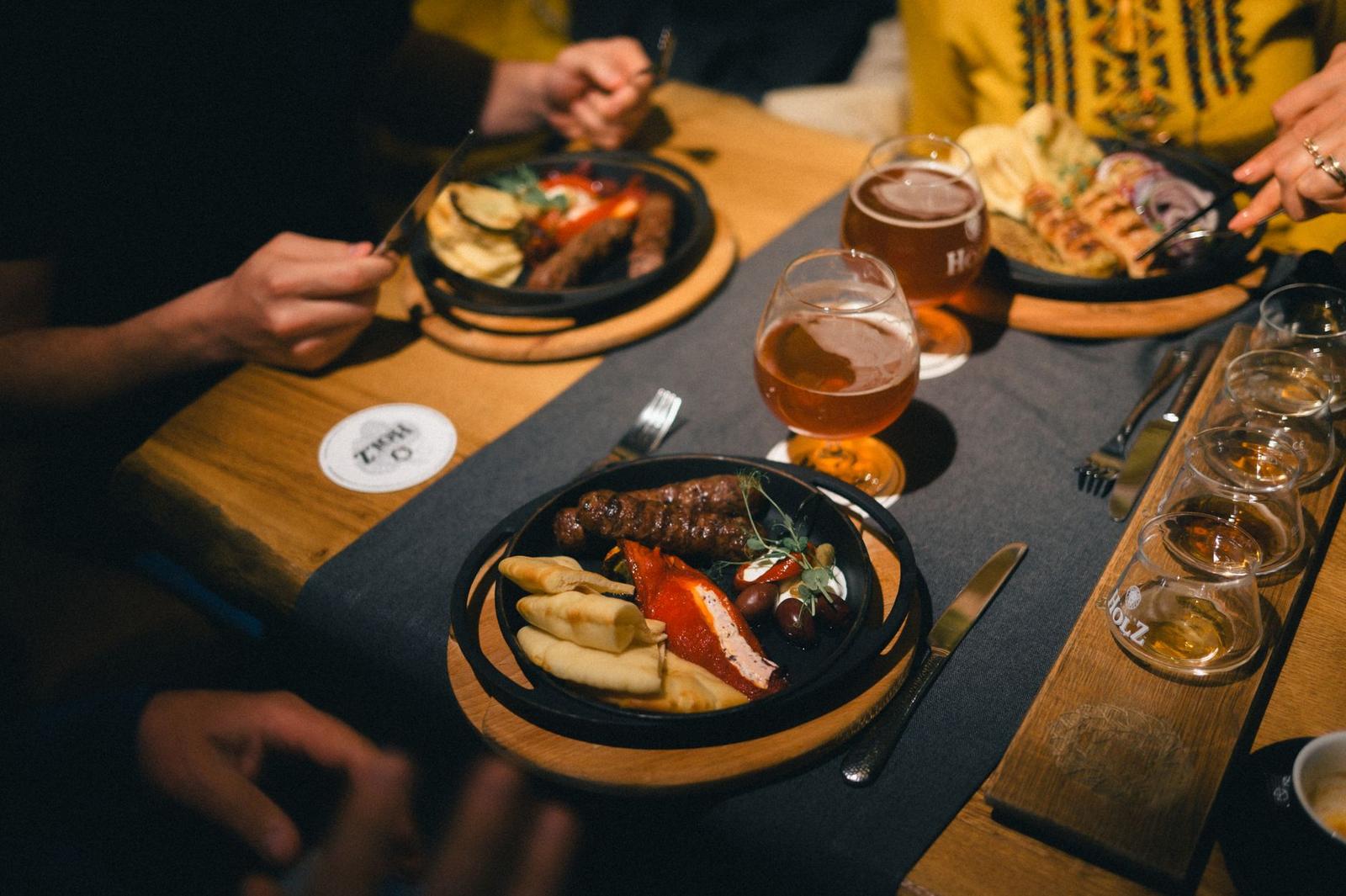
How do you start pairing at home?
Begin small. A cicerone in the Georgia Straight advises that you understand two or three beers and keep them as go-tos, noting whether each is hoppy, malty or crisp, then taste them with food and see whether they belong together.
For a more deliberate method, follow this routine from a pub professional quoted by Brew Your Own:
- Taste the beer on its own.
- List the aromas and flavors you notice.
- List foods you think will go well with it.
- Taste those foods with the beer, plus a few that were not on your list, to test your assumptions.
Step one gets easier with practice, and our guide on how to taste craft beer covers what to look for in the glass. If you are curious how today’s range of beers came about locally, you can read about the history of craft beer in florida.
Expect some misses. The Cicerone guide says not every pairing works as expected, and that this can be fun if you learn to appreciate the unexpected. Build on what works and keep looking for the combinations that surprise you.
Frequently asked questions
Does beer or wine pair better with food?
Show answer
Neither wins every time. A Brewers Association writer, who admits to being biased, says wine contrasts well with food because of its natural acidity, while beer complements and cuts through food with carbonation and hops (craftbeer.com).
Will beer with dinner fill me up too fast?
Show answer
Less than you might think. A cicerone says that when beer is poured properly into a glass, 60 percent of the carbonation is pushed out, and you can share 750-millilitre bottles, one per course, instead of drinking full pints (Georgia Straight).
What beer goes with spicy food?
Show answer
Be careful with very bitter or high-alcohol beers, because both can boost chili heat (Brew Your Own). The Cicerone guide pairs a spicy saison with New Orleans style shrimp, and carbonation helps cleanse the palate between bites.
Do I have to follow these rules strictly?
Show answer
No. The Cicerone guide says its suggestions are not absolute rules, and a cicerone in the Georgia Straight says personal preference always overrides the guidelines. Drink what you like with what you like to eat, and adjust from there.