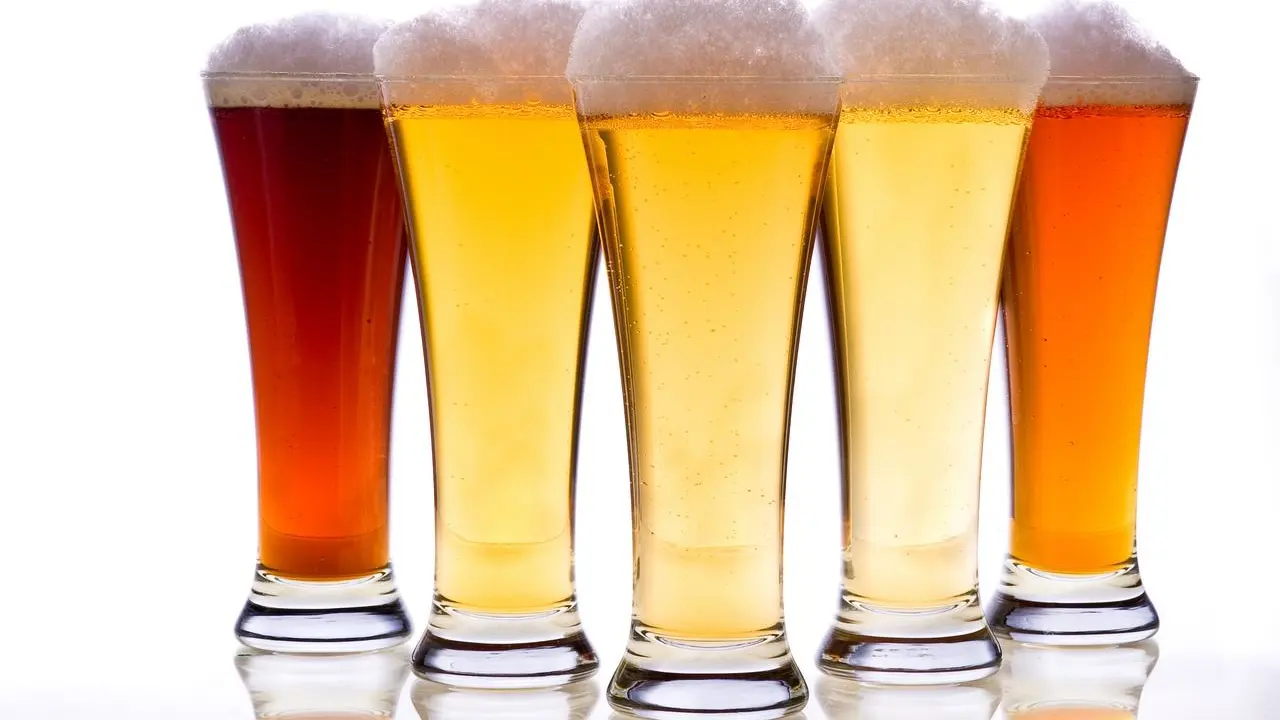
Staring at a tap list full of unfamiliar names? The main types of beer styles come down to ale, lager and wild or mixed fermentation, which guides then split into named styles by origin, color and flavor.
When you are ready to put these basics to use, the guide to craft beer in miami beach is the next step.
| Item | Value |
|---|---|
| Style families in the Brewers Association 2026 guidelines | 3 (Ale, Lager, Hybrid/Mixed Lagers or Ale) |
| Categories in the BJCP 2021 beer guidelines | 34 |
| Yeast behavior, ale versus lager | Ale: top-fermenting; lager: bottom-fermenting |
| Ordinary Bitter strength | 3.00%-4.20% ABV |
| Ordinary Bitter bitterness | 20-35 IBU |
These figures come from the Brewers Association style guidelines and the BJCP’s introduction to beer styles. Guidelines are revised from time to time, so check the source before you rely on the figures.
What are the main types of beer styles?
Start with yeast. The BJCP’s introduction says American and most other craft brewers call a beer an ale if it uses top-fermenting yeast and a lager if it uses bottom-fermenting yeast, and it calls this the most general way to sort styles (BJCP).
A third group is wild or mixed fermentation, meaning beers fermented with bacteria or non-Saccharomyces yeast. The BJCP adds that wild does not mean spontaneously fermented, because most of these beers are directly inoculated with the chosen strains.
The Brewers Association’s 2026 guidelines sort styles into style families: Ale Styles, Lager Styles and Hybrid/Mixed Lagers or Ale (Brewers Association). Each family then lists its individual styles by country of origin or type.
Labels also change with geography. In Germany, the BJCP notes, ale is thought of as a type of English beer and lager as a method of conditioning, so a Kölsch is typically described as a top-fermented lager beer rather than an ale (BJCP).
Ale styles you will meet most often
The Brewers Association groups its ales by country of origin: British, Irish, North American, German, Belgian and French, Scottish, and a set of other origins. That makes the list easier to learn than an alphabetical one (Brewers Association).
A few examples from each of the main groups:
- British: Ordinary Bitter, Special Bitter or Best Bitter, and English-Style Brown Ale.
- Irish: Classic Irish-Style Dry Stout.
- North American: American-Style Pale Ale, American-Style India Pale Ale and Juicy or Hazy India Pale Ale.
- German: German-Style Koelsch, German-Style Altbier, Berliner-Style Weisse and Leipzig-Style Gose.
- Belgian and French: Belgian-Style Dubbel, Tripel, Quadrupel and Witbier.
Ales tend to be less smooth than lagers. The BJCP says that, unless a style description notes otherwise, you can assume an ale may have some fruity esters (BJCP).
If the pale ale and IPA entries on a menu look alike to you, the guide on ipa vs pale ale explains how they differ.
Lager styles, from pale to dark
The lager family is also grouped by origin: European, North American, other and German. The European group includes Czech-Style Pale Lager and Vienna-Style Lager, while the North American group starts with American-Style Lager (Brewers Association).
The German group covers a wide range of color and strength. It runs from German-Style Leichtbier, German-Style Pilsener and Munich-Style Helles through Munich-Style Dunkel and German-Style Schwarzbier to the strong German-Style Doppelbock and German-Style Eisbock.
What ties them together is a clean profile. The BJCP says lagers tend to be smooth, clean and free of esters, though stronger and darker lagers may have light esters that round out the flavor (BJCP).
Hybrid, sour and specialty beers
Some beers do not sit cleanly in either camp. The Brewers Association’s hybrid family includes American-Style Cream Ale, California Common Beer and American-Style Wheat Beer (Brewers Association).
The same family holds many ingredient-led beers. Examples on the list include Coffee Beer, Chili Pepper Beer, Herb and Spice Beer, Wood- and Barrel-Aged Sour Beer, Gluten-Free Beer and Non-Alcohol Malt Beverage.
The BJCP handles this territory differently. Its 2021 guidelines end with categories for Fruit Beer, Spiced Beer, Alternative Fermentables Beer, Smoked Beer, Wood Beer and Specialty Beer (BJCP).
Why beer styles exist and keep changing
Styles began as local habits, not marketing plans. The BJCP explains that the high sulfates in the hard water around Burton-on-Trent gave a drier flavor that accentuated the bitterness of well-hopped ales, while the soft water in Plzen let brewers make a pale lager with high hop bitterness and a soft palate (BJCP).
Styles also keep moving. The BJCP states that beer styles are not static and change over time as ingredients, brewing technology and consumer demand change.
The two main guides serve different jobs. The BJCP’s 2021 edition is a minor revision to its 2015 edition, which was itself a major update of the 2008 edition, and its categories group styles by similar judging characteristics rather than a common heritage (BJCP introduction).
Neither guide tells a brewery what to name a beer. The BJCP says plainly that it is not telling breweries what they should call their products, so a menu name is a hint rather than a promise.
As of the BJCP release page, which carried data dated November 14, 2026, the 2021 edition (released in December 2021) is still named as the current beer version (BJCP).
How to read a style description before you order
A style description is a short checklist. The Brewers Association’s Ordinary Bitter is gold to copper-colored, low to medium in body, medium in bitterness, 3.00%-4.20% ABV and 20-35 IBU (Brewers Association).
Its neighbor, Special Bitter or Best Bitter, runs from deep gold to deep copper with medium body and a medium level of residual malt sweetness. Comparing the two shows how a step up in a family changes color and body.
When you look at an unfamiliar name, try these steps:
- Work out the family: ale, lager, wild or mixed, or hybrid.
- Check the color and body.
- Look at bitterness and malt sweetness.
- Think about strength. The BJCP assumes beers at 6% or less do not have the flavor or warming nature of alcohol unless noted (BJCP).
- Ask what the brewery means by the name, since the guides are references and not rules for brewers.
To see where yeast fits into the process behind all of these labels, read how is beer brewed.
Frequently asked questions
What is the difference between an ale and a lager?
Show answer
Ales use top-fermenting yeast and lagers use bottom-fermenting yeast, according to the BJCP’s introduction to beer styles. Lagers tend to taste smooth, clean and free of esters, while ales may show some fruity esters.
Is a Kölsch an ale or a lager?
Show answer
Both words are used. The Brewers Association lists German-Style Koelsch under ale styles, while the BJCP says Germans would typically call it a top-fermented lager beer.
Is there one official list of beer styles?
Show answer
No. The Brewers Association and the BJCP each publish their own guidelines, and the BJCP says competitions may use alternate guidelines as long as they are published for entrants and judges.
Do I need to learn every style to order well?
Show answer
No. The BJCP notes its list is not a complete list of all known beers. Knowing the yeast family, color, bitterness and strength will get you most of the way.